

Discogram Treatment Clinic in Adrian, MI
At Michigan Pain Specialists, our board-certified doctors, Dr. Louis Bojrab, MD, FIPP, Dr. John Chatas, MD, FIPP, and Dr. Edward Washabaugh, MD, FIPP, are committed to helping you uncover the exact source of your chronic back or neck pain so you can regain control of your life. Using state-of-the-art diagnostic techniques like discography, our board-certified pain management doctors pinpoint damaged spinal discs with remarkable accuracy. For more information, contact us or request an appointment online. We are conveniently located at 770 Riverside Ave suite 207, Adrian, MI 49221.
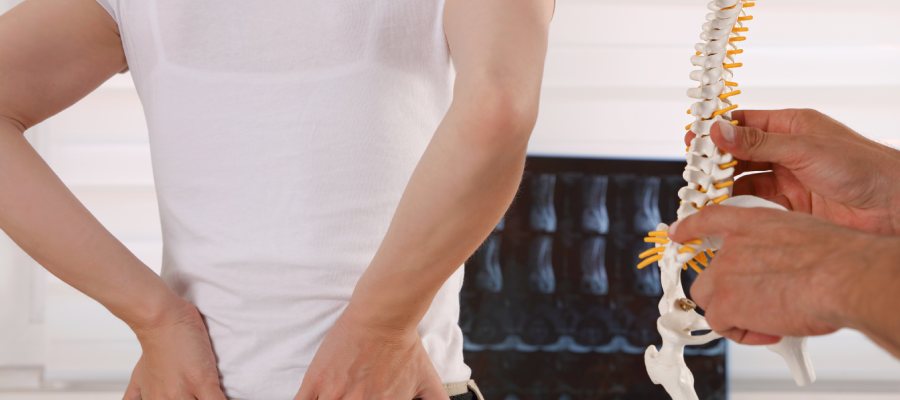
Table of Contents:
What is a discogram, and how does it help with spine pain?
How does a discogram compare to other diagnostic tests for spine pain?
Who should consider a discogram treatment?
What can I expect during a discogram procedure at Michigan Pain Specialists?
If you have been suffering from persistent spinal pain without a clear diagnosis, our team at Michigan Pain Specialists often recommends a specialized diagnostic procedure known as a discogram. Also called discography, this minimally invasive test is specifically designed to determine if one or more of your intervertebral discs are the direct cause of your back or neck pain.
During the procedure, we carefully inject a sterile liquid contrast dye directly into the center of the targeted spinal discs. This dye pressurizes the disc, allowing us to accurately observe if the injection reproduces your exact, familiar pain symptoms. By actively recreating your discomfort in a controlled clinical environment, our team can definitively isolate which discs are diseased, torn, or degenerated.
A discogram does not treat the pain itself, but it provides us with the vital, definitive information required to map out an effective, highly personalized surgical or non-surgical treatment plan. We use this precise data to target our therapeutic interventions effectively, helping you finally achieve the long-lasting pain relief you deserve.
When evaluating chronic spinal pain, our team utilizes a wide variety of advanced imaging techniques, but a discogram serves a very distinct and powerful purpose. Standard diagnostic tests like MRI (Magnetic Resonance Imaging) or CT (Computed Tomography) scans are excellent for revealing structural abnormalities, such as a bulging disc, a herniation, or spinal stenosis.
However, these imaging modalities simply provide a static picture; they cannot definitively confirm whether a specific structural abnormality is actually the source of your physical pain. Many patients have abnormal-looking discs on an MRI but experience no pain whatsoever. This is exactly where a discogram becomes an invaluable tool for our doctors at Michigan Pain Specialists. While an MRI shows us what your spine looks like, a discogram tells us exactly how your spine feels.
• Functional Diagnosis: We can directly provoke the disc to see if it triggers your usual pain.
• Precision Targeting: It distinguishes between painful and non-painful discs, even if both look damaged on an MRI.
• Enhanced Visualization: The injected contrast dye helps highlight tiny tears or fissures that standard imaging might miss
At Michigan Pain Specialists, our team reserves discogram procedures for specific patients who meet careful clinical criteria. We typically do not use this test as a first-line diagnostic tool for acute back pain. Instead, a discogram is highly beneficial for individuals who have been suffering from severe, chronic spinal pain for several months and have not found relief through conservative treatments. You may be an ideal candidate for this procedure at our Adrian clinic if you fit the following profile:
• You experience persistent lower back, neck, or groin pain that significantly limits your daily activities.
• You have already tried physical therapy, epidural steroid injections, and specialized medications without meaningful improvement.
• Your standard imaging tests, such as MRIs or CT scans, are inconclusive or fail to clearly match your pain symptoms.
• You and your surgeon are actively considering a spinal fusion or a minimally invasive disc decompression surgery and require exact verification of the painful disc.
Our board-certified physicians will thoroughly review your medical history and imaging results to ensure this diagnostic step is truly the best choice for you.
We know that undergoing any spinal procedure can cause anxiety, which is why our team prioritizes your comfort, safety, and clear communication every step of the way. When you visit Michigan Pain Specialists in Adrian, MI, your discogram will be performed in our advanced, sterile outpatient facility by our board-certified doctors, Dr. Louis Bojrab, MD, FIPP, Dr. John Chatas, MD, FIPP, and Dr. Edward Washabaugh, MD, FIPP.
You will be comfortably positioned on your stomach and provided with local anesthesia to completely numb your skin and the surrounding tissues. We may also offer mild intravenous sedation to help you relax, though you will remain awake enough to accurately report your pain levels to our doctors. Using real-time fluoroscopic x-ray guidance, we will precisely navigate a very thin needle into the targeted spinal discs.
As we inject the contrast dye, we will gently ask you if you feel any pressure or if the injection perfectly recreates your typical, everyday pain. Once the diagnostic test is complete, our team will conduct a detailed post-procedure CT scan to analyze the dye’s dispersion, allowing us to finalize your comprehensive, customized pain management strategy.
For more information, contact us or request an appointment online. We are conveniently located at 770 Riverside Ave suite 207, Adrian, MI 49221. We serve patients from Adrian MI, Tecumseh MI, Blissfield MI, Britton MI, and surrounding areas.
Check Out Our 5 Star Reviews



Additional Services You May Need
▸ Epidural Steroid Injections
▸ Spinal Cord Stimulation
▸ Rhizotomy Ablations of the Spine
▸ Intracept
▸ Sacroiliac Joint Pain
▸ Diabetic Neuropathy
▸ Cancer Pain
▸ Cervical Radiculopathy
▸ Lumbar Radiculopathy (Sciatica)
▸ Spinal Stenosis
▸ Spondylolisthesis
▸ Facet Joint Syndrome
▸ Spinal Compression Fractures
▸ RSD (Complex Regional Pain Syndrome)
▸ Coccydynia (Tailbone Pain)


 Send Text
 How May I Help You?