

Endoscopic Radiofrequency Ablation Treatment Clinic in Ann Arbor, MI
Common questions asked by patients: What is endoscopic radiofrequency ablation? What conditions can be treated with endoscopic radiofrequency ablation? How does endoscopic radiofrequency ablation differ from other pain treatments? Is endoscopic radiofrequency ablation a permanent solution for pain relief? Insights from Our Board-Certified Doctors. For more information, contact us or request an appointment online. We are conveniently located at 710 Avis Dr #200, Ann Arbor, MI 48108. We serve patients from Ann Arbor MI, Saline MI, Ypsilanti MI, Dexter MI, and surrounding areas.
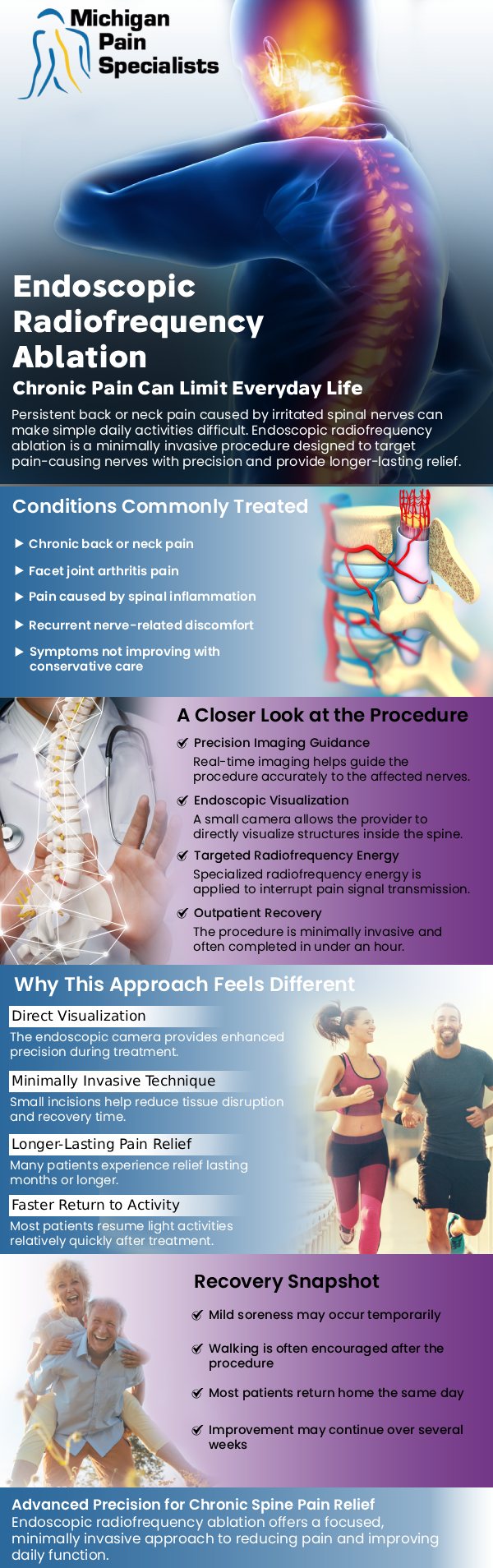
Endoscopic Radiofrequency Ablation is also know as:
• Endoscopic Rhizotomy
• Radiofrequency Neurotomy
This is a highly effective yet minimally invasive procedure for the treatment of back pain caused by arthritis.
Endoscopic Radiofrequency Ablation is an outpatient procedure lasting less than an hour. Using real-time X-ray guidance (fluoroscopy) a small metal tube, the size of a pencil, is inserted through the skin in to the spinal column. This serves as a passage for an endoscopic camera that allows the doctor live visualization of the spine. Once the nerves are visualized, a radiofrequency electrode is used to burn the nerves that are causing arthritis pain. The relief can last more than 2-5 years, and post procedural pain is minimal.
Endoscopic Radiofrequency Ablation – Post Operative Instructions
Post Anesthesia:
If you received anesthesia/sedation for the remainder of the day you so you should NOT make critical decisions or sign any legal documents. You should NOT consume alcohol. You should NOT drive or operate heavy machinery.
Medications:
You may be prescribed a post-operative medications, if so take as instructed. If you are on a blood thinner speak with your doctor about when to resume.
Incision Care:
If there is a dressing, you may remove it 24 hours after surgery BEFORE your shower. If surgical glue is used expect it will slowly peel off within 14 days. Please call us with any changes or concerns such as: redness, swelling or drainage at incision site, or temperature greater than 101°. (Clear liquid drainage in the first 24 hours is normal) .
Bathing:
You may shower after you remove your dressing on the morning after surgery; avoid scrubbing the incision site for the first 5 days. No baths or swimming until approved by the physician or physician assistant at your follow up appointment.
Restrictions:
No restirctions.
Exercise:
Increase your light activity each day, such as walking, as tolerated.
Diet:
Eat a healthy diet to promote healing.
Smoking:
No smoking. Smoking can affect the rate of bone and skin healing needed to heal from this surgery.
Driving:
You may drive the day after the procedure if you feel okay to do so. Do not drive if you are taking pain medications
Follow-Up:
You may experience soreness in your back for up to 2 weeks. You will have a post-operative appointment approximately 14 days after surgery. If you have not already made your follow-up appointment, call your surgeons office to make one.
If you have any questions or concerns, please contact us
Check Out Our 5 Star Reviews



Additional Services You May Need
▸ Epidural Steroid Injections
▸ Spinal Cord Stimulation
▸ Rhizotomy Ablations of the Spine
▸ Intracept
▸ Sacroiliac Joint Pain
▸ Diabetic Neuropathy
▸ Cancer Pain
▸ Cervical Radiculopathy
▸ Lumbar Radiculopathy (Sciatica)
▸ Spinal Stenosis
▸ Spondylolisthesis
▸ Facet Joint Syndrome
▸ Spinal Compression Fractures
▸ RSD (Complex Regional Pain Syndrome)
▸ Coccydynia (Tailbone Pain)


 Send Text
 How May I Help You?